Understanding the House Edge in Online Casino Games: What Every Player Needs to Know
Online casinos have revolutionized the way people experience gambling, providing easy access to a wide variety of games from the comfort of home. Yet, whether you’re spinning slots or playing a hand of blackjack, one crucial concept always shapes your chances: the house edge. Knowing what the house edge is, how it works, and how it impacts your play can make a significant difference in your overall gaming experience and help you make smarter decisions. In this article, we’ll break down the mathematics behind the house edge, compare popular online casino games, dispel common myths, and offer practical insights to help you play with confidence.
What Is the House Edge? The Basics Explained
The house edge is a fundamental concept in all casino games, both online and offline. Simply put, it’s the mathematical advantage that the casino has over the player in any given game. Expressed as a percentage, the house edge reflects the average profit the casino expects to make from each bet over the long term. For example, if a game has a house edge of 2%, the casino expects to keep 2 cents for every dollar wagered.
This advantage is built into the rules and payouts of each game. It’s not a “trick” or hidden fee, but rather a statistical certainty that ensures casinos remain profitable while still offering the possibility of player wins. The house edge is not a guarantee that you will lose every time you play, but over thousands or millions of bets, it predicts the average return to the casino.
.png)
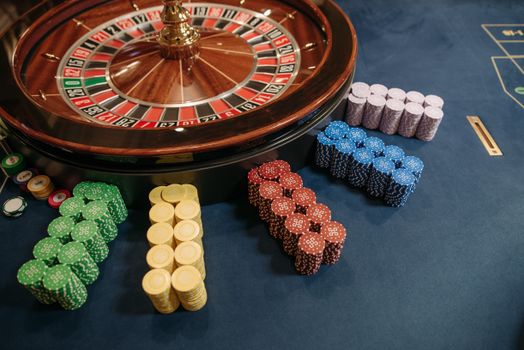
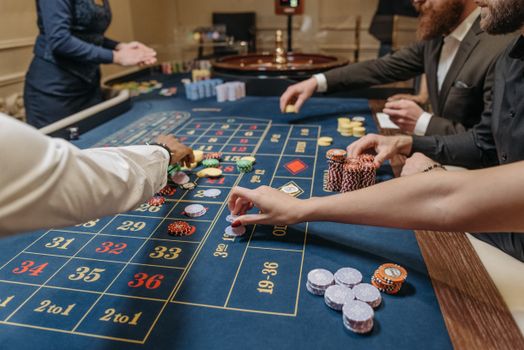
A simple example: In European roulette, there are 37 pockets (1 to 36, plus a single zero). If there were no house edge, a bet on a single number would pay out 36 to 1, matching the 1-in-37 odds. Instead, the payout is 35 to 1, creating a house edge of about 2.7%.
How the House Edge Varies Across Popular Online Casino Games
Not all casino games are created equal when it comes to the house edge. Some games offer players better odds, while others tilt the advantage more heavily in the casino’s favor. Understanding these differences can help you choose games that fit your risk tolerance and playing style.
The table below compares the house edge for several popular online casino games:
| Game | Typical House Edge (%) | Key Factors Affecting Edge |
|---|---|---|
| Blackjack | 0.5 - 2.0 | Player skill, number of decks, rule variations |
| European Roulette | 2.7 | Single zero wheel |
| American Roulette | 5.26 | Double zero wheel |
| Baccarat | 1.06 (Banker bet) | Type of bet (Banker, Player, Tie) |
| Slot Machines | 2.5 - 15.0 | Game design, RTP (Return to Player) percentage |
| Craps | 1.41 (Pass Line bet) | Bet type |
| Video Poker | 0.5 - 5.0 | Game version, player strategy |
As you can see, games like blackjack and baccarat typically offer a much lower house edge, especially when players use optimal strategy. In contrast, slot machines can have a wide range of house edges, with some games keeping up to 15% of all wagers.
The Mathematics Behind the House Edge
To fully understand the house edge, it helps to look at the math behind it. The house edge is calculated by comparing the true odds of a game to the payout odds offered by the casino. The gap between these two is where the casino makes its profit.
Let’s revisit the roulette example. In European roulette, the probability of winning a single number bet is 1 in 37, or about 2.70%. The payout is 35 to 1. If you made 37 $1 bets on each number, you’d win once, receiving $35, but lose $36, for a net loss of $1. This means the house edge is $1 divided by $37, or 2.7%.
Another example is baccarat. A Banker bet has a house edge of just 1.06%. Over 1,000 bets of $10 each, the casino expects to “earn” $106 on average, while $9,894 is returned to players as winnings.
The house edge is always measured over the long run. In the short term, luck and variance can lead to big wins or losses, but over thousands of bets, the statistical average will emerge.
RTP vs. House Edge: Two Sides of the Same Coin
When researching online casino games, you’ll often encounter the term RTP, or Return to Player. RTP is simply the inverse of the house edge. If a game has a house edge of 4%, its RTP is 96%. RTP indicates the percentage of total wagers that a game will pay back to players over time.
For example, a slot machine with an RTP of 96% will, on average, return $96 for every $100 wagered. The remaining $4 represents the house edge. It’s important to note that RTP is a long-term average—individual sessions can be much higher or lower.
The key takeaway: Look for games with high RTP (and thus low house edge) if you want to maximize your chances of winning over the long term.
Common Myths and Misunderstandings About the House Edge
The house edge is straightforward in theory, but many players misunderstand how it works in practice. Let’s clarify some common myths:
1. “The house edge means I’ll always lose.” This is not true. The house edge is a long-term average, not a prediction of individual outcomes. Players can and do win—sometimes big—but the casino’s edge ensures profitability over many bets. 2. “If I play long enough, I’m due for a win.” The idea of being “due” is called the gambler’s fallacy. Each bet is independent; the house edge remains the same no matter how long you play. 3. “Changing my bet size or pattern can beat the house edge.” No betting system can change the underlying house edge. Strategies like the Martingale (doubling bets after losses) don’t alter the mathematics of the game. 4. “All games have the same house edge.” As shown in the earlier table, house edges vary widely between games and even between bets within the same game.Understanding these realities helps you approach online casino gaming with realistic expectations.
How the House Edge Impacts Your Bankroll
While the house edge is a statistical concept, it has real implications for your bankroll—the amount of money you bring to the casino. The higher the house edge, the faster you can expect to lose money over time.
Let’s look at a practical example. Suppose you play slots with a house edge of 5% and make 500 $1 bets per hour. Your expected loss per hour is:
500 bets x $1 x 5% = $25 per hour
By contrast, if you play blackjack with a house edge of 1%, your expected loss drops to $5 per hour (assuming the same number of bets and bet size).
This doesn’t mean you can’t win—luck can swing in your favor—but if you play for long periods, the house edge will gradually erode your bankroll. That’s why it’s wise to choose games with a lower house edge, manage your betting pace, and set limits on your play.
Can You Reduce the House Edge? Tips and Realities
Many players wonder if it’s possible to beat or reduce the house edge. While you can’t eliminate it entirely, there are ways to minimize its impact:
- Learn optimal strategies: Games like blackjack and video poker offer strategies that can reduce the house edge. For example, perfect blackjack basic strategy can lower the edge to about 0.5%. - Choose favorable variants: Some versions of games (like European vs. American roulette) have a lower house edge. Always check the rules before you play. - Take advantage of bonuses and promotions: Welcome bonuses, free spins, and loyalty programs can add extra value, but always read the terms and conditions. - Avoid high house edge bets: For example, in craps, the “Pass Line” bet has a house edge of 1.41%, but the “Any 7” bet has a whopping 16.67% edge. - Manage your bankroll: Setting limits on your play helps you avoid chasing losses and keeps gambling fun.Remember, the house edge is built into casino games, but understanding it can help you make smarter choices and stretch your entertainment budget further.
Final Thoughts on Understanding the House Edge in Online Casino Games
The house edge is the backbone of every online casino game, shaping your chances and the casino’s profits. By understanding how the house edge works, how it varies between games, and what it means for your bankroll, you can approach online gambling with greater confidence and clearer expectations. While the house always has an advantage, smart players can minimize its impact by choosing the right games, using optimal strategies, and managing their play responsibly. Ultimately, enjoying online casino games is about entertainment, not guaranteed profit—but with the knowledge of the house edge, you’re better equipped to enjoy the ride.